13 Livestock Guardian Dog Breeds: Info, Pictures & Origins

In this article
If you have any experience with owning livestock, you know there are predators out there who want your livestock for dinner. Depending on the area you live in, there could be coyotes, mountain lions, foxes, wolves, or even bears. A livestock guardian dog could help you keep all your chickens, ducks, goats, sheep, or other small livestock safe and accounted for.
Sure, there’s your average family house dog who barks from the inside of the house at every person walking by, and then there are livestock guardian dog breeds. These dogs are quite different from normal dogs, as they are bred to protect and gather whatever livestock they are set in charge of.

The 13 Livestock Guardian Dog Breeds
1. Great Pyrenees

Breed Overview
Height:
Weight:
Lifespan:
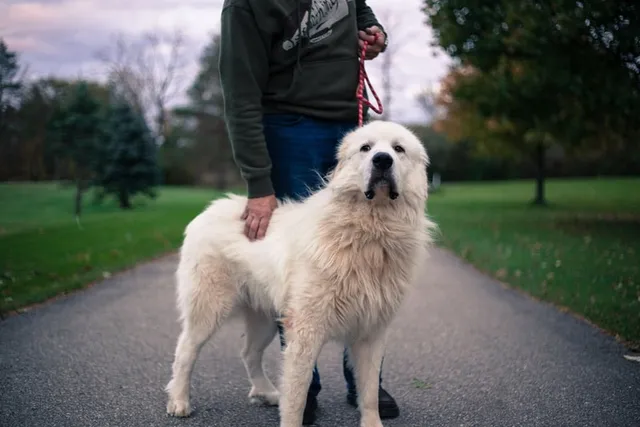
Likely the most popular livestock guardian dog, the Great Pyrenees dog breed has been around since the 15th century. Originally from the Pyrenees Mountains in Europe, the breed first came to the United States in 1931. These dogs are gentle towards livestock and children and fearless towards unwanted predators. Their nocturnal sleep schedules mean they can stay up and interact with your livestock all evening, so there’s no need to worry about them being out to pasture.
2. Kuvasz

Breed Overview
Height:
Weight:
Lifespan:
Hailing from Hungary, the Kuvasz is a big dog with a big personality. Believe it or not, these dogs are well known for being humorous. Because of this, they make a great family dog and have been growing in popularity as household pets. Although funny, these dogs are also quite independent and can bark often, and they may not be great to have if you have other small pets around.
3. Anatolian Shepherd

Breed Overview
Height:
Weight:
Lifespan:
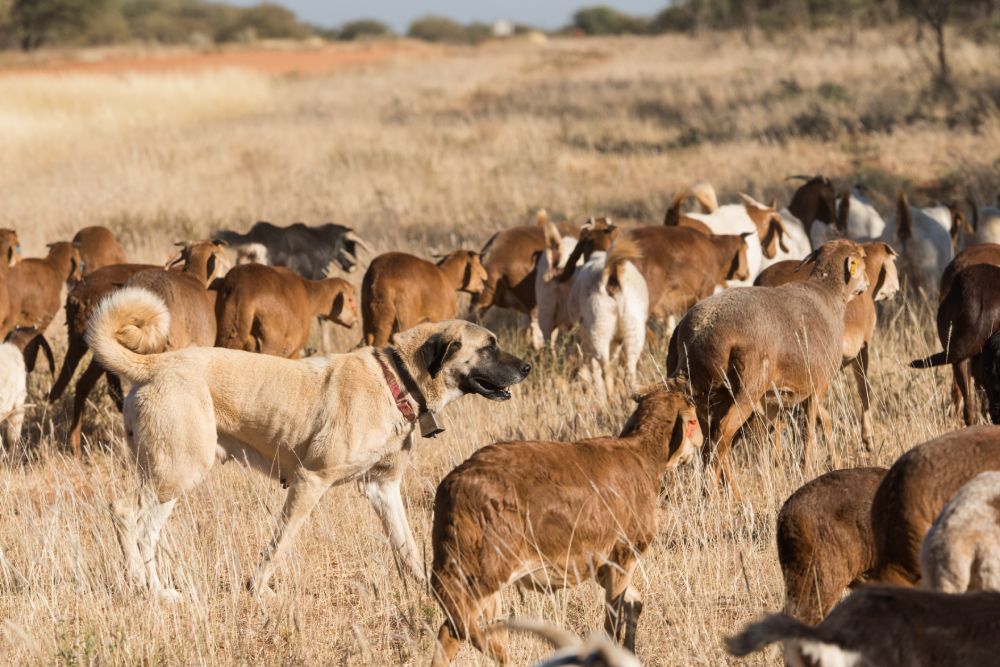
This Turkish LGD is thought to have been a crossbreed between an Akbash and a Kangal dog. Anatolian Shepherds were first brought to the United States as a part of a Department of Agriculture program trying to figure out which dog was the best sheepdog. When the program fell through, the dogs were sold to the general public.
Anatolian Shepherds’ personality traits are described as independent, stubborn, agile, and speedy. They are praised for their intelligence, and their sense of hearing is extremely good.
4. Akbash

Breed Overview
Height:
Weight:
Lifespan:
The Akbash dog breed is also from Turkey and is rarely seen outside of the country. It’s been around for centuries, keeping close watch over large and small livestock by watching out for any changes in the environment around them. Akbash dogs, when trained well, only attack when they are challenged, which could make them a great dog breed for a family that has many visitors.
5. Kangal

Breed Overview
Height:
Weight:
Lifespan:
Even though the Kangal has only recently been heard of in the rest of the world, they have been guardian dogs in Turkey since ancient times. These dogs are fast, reaching speeds of up to 31 miles per hour when they need to. Kangals are the best of both worlds when it comes to LGDs: they are loyal and gentle to their owners while also guarding your livestock with their lives.
6. Caucasian Shepherd Dog

Breed Overview
Height:
Weight:
Lifespan:
Caucasian Shepherd dogs are massive and protective to boot. These dogs have been sheepdogs in the Caucasus mountains (which include the countries of Armenia, Azerbaijan, and Georgia) for hundreds of years, known for fighting off wolves, jackals, and even bears. When you bring a Caucasian Shepherd dog home, be prepared with a lot of training in your back pocket. Because these dogs have an independent and stubborn streak, it’s not recommended that first-time dog owners take on the task of being responsible for this dog.
7. Komondor

Breed Overview
Height:
Weight:
Lifespan:
The Komondor, also known as the Hungarian Shepherd, blends right in with its surroundings; from far away, it looks just like one of the sheep in a herd. This means that an unsuspecting predator would get quite the shock if they tried to carry away one of the livestock. Their hair starts off curly and gradually forms cords over the years. It takes about 2 years for these cords to form. Komondors make excellent guard dogs. To keep them from pinning your visitors down, make sure they are well socialized at a young age.
8. Karakachan

Breed Overview
Height:
Weight:
Lifespan:
A dog breed originating from Bulgaria, the Karakachan is still found shepherding in its native country, as well as Greece, Romania, Serbia, and Macedonia. At one time, the breed was used by the Bulgarian military for border patrol, but now they are almost always guardian dogs. Although they can be affectionate and loving to people they call family, they can show aggression to people they do not know. Karakachan owners should keep their dogs trained well to avoid this problem.
9. Pyrenean Mastiff

Breed Overview
Height:
Weight:
Lifespan:
Like many dog breeds on this list, Pyrenean Mastiffs are a very old dog breed. They come from Spain originally. After the Spanish Civil War, economic hardships meant that people could no longer feed these massive dogs, and they nearly went extinct. Today they are no longer endangered, but they are still quite rare.
Due to their giant size and territorial personality, Pyrenean Mastiffs should be properly trained when growing up from puppyhood to avoid accidents and injuries as adults. As long as you are on their good side, though, they will love and protect you until their last day.
10. Polish Tatra Sheepdog

Breed Overview
Height:
Weight:
Lifespan:
The Polish Tatra is a gentle giant. Compared to the other livestock guardian dogs, the Polish Tatra is not as aggressive. By only barking and being there near the livestock, they defend and protect the herds. Just like the Pyrenean Mastiff, this breed would have been almost extinct if it were not for breeding efforts in Poland.
As the saying goes, the Polish Tatra’s bark is bigger than its bite, as it’s known for its loud bark. However, one upside to this breed is that they do not drool. Drooling is a common trait in large dogs.
11. Tibetan Mastiff

Breed Overview
Height:
Weight:
Lifespan:
Tibetan Mastiffs may be the most ferocious livestock guardian dogs on the list. These Mastiffs have been known to take on flying predators, coyotes, and bears. Because their ancestors come from the harsh Himalayan mountain conditions, Tibetan Mastiffs are hardy and have a thick coat of fur, so they will do well in cold winters. They will stay up all night with your livestock and sleep during the day. Get them trained when they are young to avoid certain stubborn behaviors.
12. Tornjak

Breed Overview
Height:
Weight:
Lifespan:
The next LGD breed on the list is also the smallest: the Tornjak, also known as the Croatian Mountain dog. Though smaller, the Tornjak is still strong and powerful. It comes from the area formerly known as the Balkans, but today is called Croatia, Herzegovina, and Bosnia. This dog breed is calm and steady for its owners and suspicious of strangers. They cannot be bribed and they learn quickly, making them easy to train. Make sure to do so when they are young, though, or they could get aggressive and out of control.
13. Maremma

Breed Overview
Height:
Weight:
Lifespan:
The Maremma dog, also known as Maremmano-Abruzzese Sheepdog, Maremma Sheepdog, or Abruzzese Sheepdog, is an Italian sheepdog that is known for its intelligence, loyalty, and friendliness. The Maremma has the necessary skills to guard different types of animals and is known to be friendly with other pets, such as cats.
If you’re considering having a Maremma, it’s important to know they’re loud barkers. They will follow their instinct to bark at anything they perceive as a threat. Even though Maremmas can be trained, it’s difficult to control their barking, so it’s worth considering whether barking is a deterrent for you or not.

Livestock Guardian Dog Breed Characteristics
Before you decide to buy yourself a livestock guardian dog from this list of breeds, let’s explore their temperaments a little more and why they may or may not be a good fit for your property and family.
LGDs have their pros and cons. They are excellent, of course, at guarding things. These dog breeds are independent dogs who think quickly on their feet. There’s no need to tell these dogs to attack; it’s in their DNA to ward off predators with a nasty bark or a charge and attack.
Livestock Dog Temperament: Aggressive or Friendly?
With that being said, some people worry that these dogs may be too aggressive for their families or their small animals. In fact, most of these dogs are usually docile towards livestock and their owners.
Many of these dog breeds are considered great family dogs; it’s strangers and other visiting pets that you might have to worry about. That’s because these dog breeds consider anything outside of their inner circle a threat to what they protect. So, if you get an LGD, be prepared to either train him well at a young age or keep him chained or caged up when you have visitors over, just in case.
Do Livestock Guardian Dog Breeds Bark a Lot?
Yes, livestock dogs tend to bark a lot. It makes sense: their entire aim is to ward off any threat to the animals they protect, so they are likely to bark at anything they sense is threatening. You can safely assume that if you bring an LGD home, there will be a lot of barking going on at any hour, depending on the activity around your home or property.
For this reason, consider your property: is it large or small? Are there neighbors very close that might be bothered by a lot of barking? Do you have people walking along the streets nearby often? By asking yourself these questions, you will better know if a livestock guardian dog will be suitable for your situation.
Dog vs. Wild Animal: Can Livestock Dogs Kill?
Livestock guardian dogs can definitely kill predators. Research by The Conversation reveals that, out of the scientific reports about livestock dogs that they studied, 34% of livestock dogs chased away predators, and 10% of the time the dogs killed them. The type of predator is not specified, but you can be sure that having a livestock guardian dog is probably better than not having one when it comes to your livestock’s safety.

Conclusion
By now you’ve learned that livestock guardian dogs are big, loyal, and always have a watchful eye out for threats, even through the night. These dogs, when trained and socialized well at a young age, will protect not only your livestock but also your family when needed.
Sources
Featured Image Credit: Bobby Bradley, Shutterstock
Expert dog care, straight to your inbox
News, insights, expert advice, and everything dog.

No spam — unsubscribe anytime.
By signing up, you agree to our Terms & Conditions and Privacy & Cookies Policy.
How useful was this post?
Click a star to rate. You can leave written feedback afterwards. (We read all feedback.)
Nicole has loved animals of all sizes her whole life so it's no wonder she has dedicated her career to helping them through what she loves best: learning, writing, and sharing knowledge with others. She’s the proud mom of two dogs, a cat, and a human. With a degree in Education and 15+ years of writing experience, Nicole wants to help pet parents and pets around the planet to live happy, safe, and healthy lives.